Sound Therapy for Anxiety and Stress Reduction

Eric Blue
Founder & Lead Developer
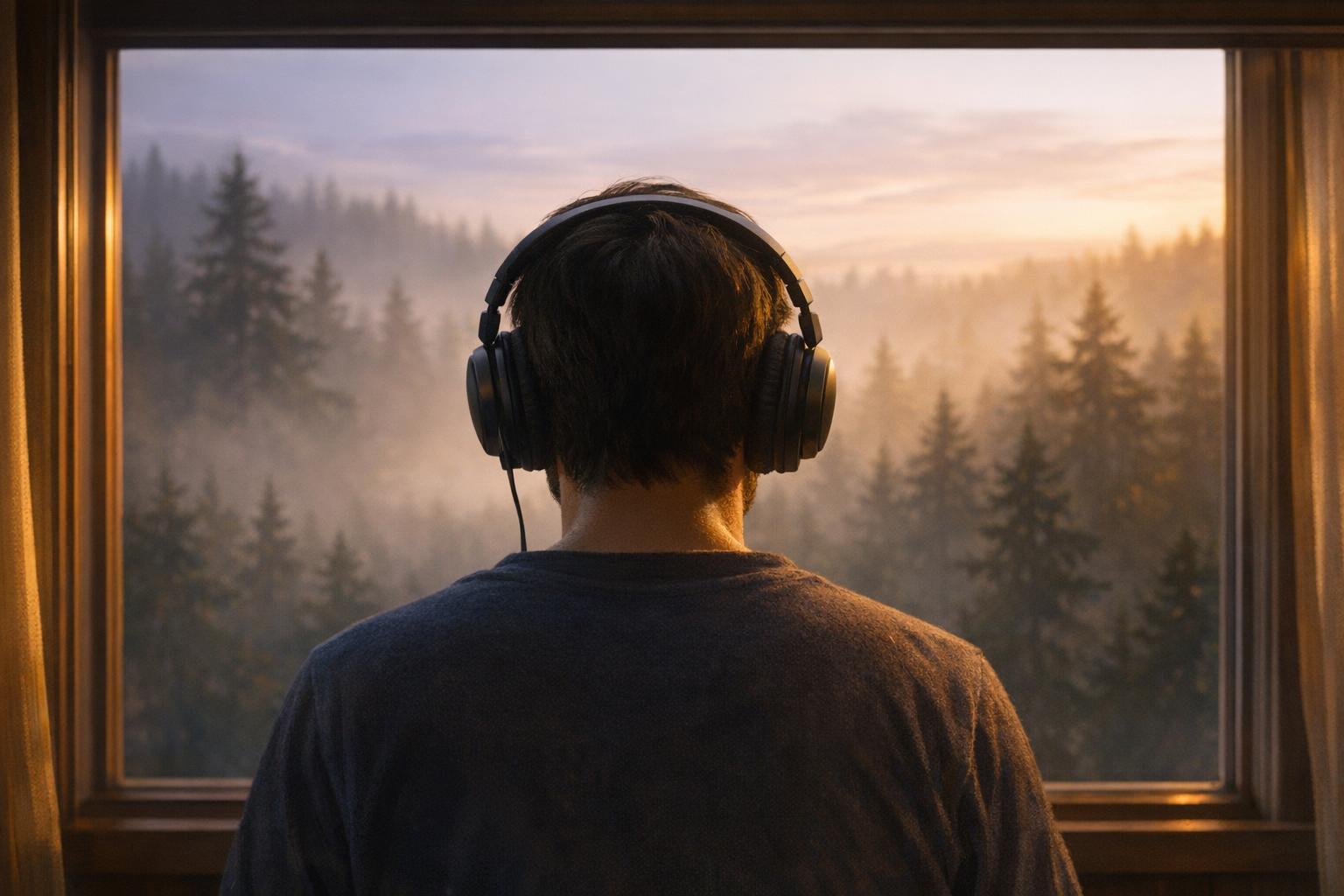
Anxiety is one of the most common reasons people first try binaural beats, and it’s also one of the areas where the research is most encouraging. The effect sizes are modest, but compared with other low-risk, low-cost interventions, the case for sound-based work as part of an anxiety toolkit is pretty solid.
What “Sound Therapy” Covers
It’s a broad umbrella, and not all of it is the same:
- Binaural beats and brainwave entrainment, audio designed to nudge the brain toward a target frequency
- Music therapy, structured use of music (often live, often with a therapist) for emotional regulation
- Singing bowls and gong baths, overtone-rich sounds with strong harmonic content
- Soundscapes and nature audio, ambient environmental sound used for grounding
- Solfeggio frequencies, specific tones (528 Hz, 432 Hz, etc.) with often-overstated metaphysical claims but real relaxation effects when used as carriers
These have different mechanisms and different evidence bases. Binaural beats and music therapy have the strongest research support; the others fall on a spectrum from “probably helpful because relaxation is helpful” to “actively oversold.”
The Anxiety Research
A few landmark studies and reviews:
Opartpunyasarn et al. (2022) found that binaural beat audio reduced pre-procedural anxiety in patients undergoing fiberoptic bronchoscopy more effectively than standard music or silence, a strong test because the setting is genuinely anxiety-provoking.
Wahbeh et al. (2007) demonstrated reductions in trait anxiety, quality of life improvements, and lower cortisol after a 60-day course of binaural beat exposure.
A 2024 systematic review (Miclăuş et al.) of 12 studies on binaural beats for anxiety and depression concluded the intervention produced reliable reductions in anxiety symptoms, with the strongest effects when sessions were at least 15 minutes and used theta or alpha target frequencies.
Pre-surgical anxiety is the setting with the most replicated effect, multiple RCTs across different surgical contexts show binaural beat audio reduces self-reported anxiety in the pre-operative window.
The consistent thread: binaural beats are not a replacement for evidence-based anxiety treatment (CBT, SSRIs for clinical anxiety disorders), but they’re a meaningful add-on for situational and subclinical anxiety.
What’s Happening Physiologically
The mechanism appears to involve more than just the entrainment effect:
- Parasympathetic activation. Slower-frequency audio (theta and alpha range) tends to shift heart rate variability toward parasympathetic dominance, the same direction as slow breathing.
- Reduced cortisol response. Several studies show blunted cortisol reactivity after binaural beat sessions, particularly when used regularly over weeks.
- Default mode network quieting. Anxious cognition is associated with overactive DMN, the same network mindfulness practice tends to quiet. Theta-range audio shows similar effects in some studies.
- A psychological framing effect. Putting on headphones and committing to a 20-minute session is itself a stress-reduction ritual, separate from the audio’s neural effect.
The last one isn’t a debunking, it’s part of why this works. The audio gives you a structured permission slip to do nothing useful for 20 minutes, and your nervous system rewards you for it.
A Working Protocol
For situational anxiety (a presentation, a difficult conversation, a medical procedure):
| Phase | Timing | Audio | Goal |
|---|---|---|---|
| Pre-event | 20–30 min before | 8 Hz alpha | Calm baseline, clear head |
| Wind-down after | Within 1 hr after | 6 Hz theta | Down-regulate the stress response |
For ongoing generalized anxiety (as a daily practice, not a crisis tool):
| Time | Duration | Audio | Goal |
|---|---|---|---|
| Morning | 15 min | 10 Hz alpha | Start with relaxed focus |
| Mid-day | 10 min | 8 Hz alpha | Reset stress accumulation |
| Bedtime | 20 min | 4–6 Hz theta to delta | Down-shift for sleep |
What Doesn’t Work for Anxiety
A few patterns worth flagging:
- Gamma-range audio during anxiety. 40 Hz audio can feel agitating when you’re already activated. Save it for cognitive sessions when you’re calm.
- Loud volume. The orienting response is the opposite of what you want. Quiet audio works better than loud audio for anxiety reduction.
- Sporadic use. Like meditation, the benefits compound with regular use. A single session during a panic moment is less helpful than a daily practice that lowers your overall reactivity.
- Using audio to avoid the underlying issue. If anxiety is being driven by an actual circumstance you can change, sound therapy is a coping tool, not a substitute for changing the circumstance.
When to Seek Other Help
Sound therapy is an adjunct, not a treatment. The signs you need more than audio:
- Panic attacks that are increasing in frequency or severity
- Anxiety that significantly disrupts work, sleep, or relationships
- Avoidance behaviors that are narrowing your life
- Co-occurring depression, persistent low mood, or thoughts of self-harm
In any of those cases, please reach out to a mental health professional. Binaural beats can be part of your toolkit alongside evidence-based treatment, they’re not a substitute for it.
Closing Thought
Anxiety is one of the most common and most treatable forms of psychological distress. Sound-based interventions are a low-risk, low-cost, and increasingly evidence-supported addition to that toolkit. Used consistently, and combined with the other practices that actually move the needle, like sleep, exercise, therapy where appropriate, and meaningful social connection, they can take a meaningful edge off baseline stress and give you a reliable, on-demand way to down-regulate when you need it.