Binaural Beats for Sleep: Delta Frequencies Explained

Eric Blue
Founder & Lead Developer
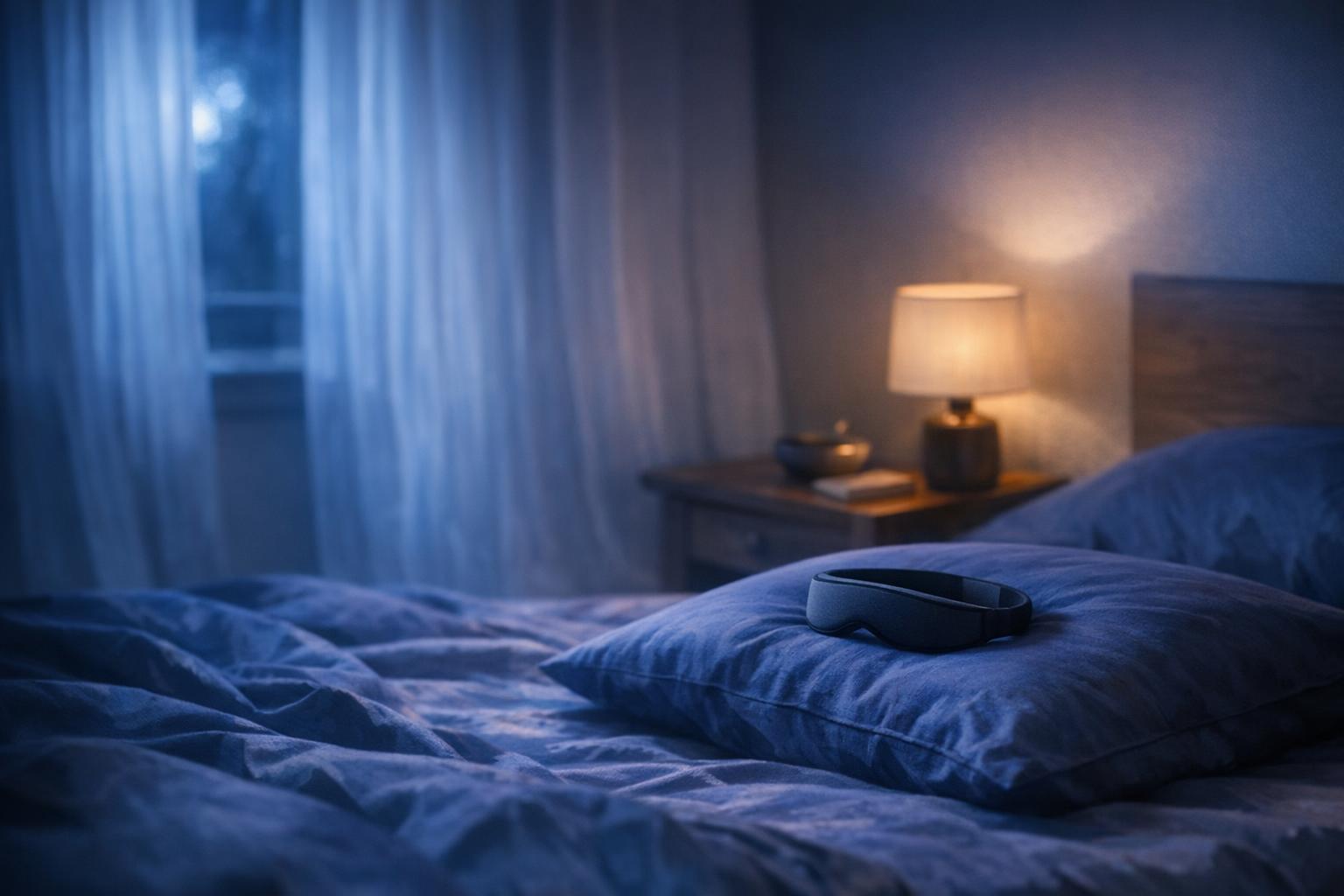
Of all the brainwave bands, delta is the one our bodies need the most and the one most of us struggle to get enough of. Modern sleep is shorter, more interrupted, and more screen-saturated than ever. Binaural beats won’t fix sleep hygiene on their own, but they’re an evidence-supported way to ease the brain into the slower frequencies that restore the body.
What’s Happening in Delta Sleep
Delta waves cycle at 0.5–4 Hz and dominate during the deepest stages of non-REM sleep (NREM stage 3, sometimes still called “slow-wave sleep” or SWS). This is the part of the night when:
- Growth hormone secretion peaks
- The glymphatic system clears metabolic waste from the brain
- Memory consolidation shifts hippocampal content into long-term cortical storage
- Cardiovascular load drops and immune activity ramps up
You typically get most of your delta sleep in the first third of the night. Miss that window, by going to bed late, drinking alcohol close to bedtime, or being repeatedly woken, and the brain has limited opportunity to make it up.
The Research on Binaural Beats and Sleep
The sleep literature on binaural beats is younger than the meditation literature, but the signal is consistent: delta-frequency entrainment can help people fall asleep faster, stay asleep longer, and report better subjective sleep quality.
Jirakittayakorn & Wongsawat (2018) found that exposure to a 3 Hz binaural beat shifted EEG power toward delta and theta in healthy adults, with measurable increases in slow-wave activity.
Abeln et al. (2014), working with soccer players, reported improved sleep quality and a small but consistent uptick in next-day cognition after eight weeks of delta-frequency binaural beat exposure before bed.
A 2023 systematic review of audio-based brainwave entrainment for sleep concluded that while effect sizes are modest, the intervention is low-risk and produced reliable improvements in sleep-onset latency and subjective quality across studies.
The picture isn’t that binaural beats cause sleep, it’s that they help the nervous system downshift, the same way a dark room or a cool bedroom does.
A Practical Sleep Protocol
The setup that works for most people:
- Headphones, but the right kind. Avoid in-ear buds that hurt to sleep on. Flat sleep-headband headphones or pillow speakers (which sacrifice some stereo separation but preserve the binaural effect at low volumes) work well.
- Start in the theta range, drift to delta. Begin a session around 6 Hz for 5–10 minutes to ease in, then transition to 2–3 Hz for the next 20–30 minutes.
- Keep volume low. Loud audio activates the orienting response, exactly what you don’t want at bedtime.
- Pair it with the rest of your sleep hygiene. No caffeine after early afternoon, cool dark room, no screens 30 minutes before bed.
Frequency Targets by Sleep Goal
| Goal | Target | Notes |
|---|---|---|
| Falling asleep faster | 4 Hz tapering to 2 Hz | A 20-minute taper works well |
| Deeper slow-wave sleep | 2–3 Hz | Run for 30–45 minutes after lights out |
| Reducing night waking | 3 Hz with low-volume looping | Some users loop all night at very low volume |
| Pre-sleep wind-down | 6–8 Hz (theta) | Replaces “scrolling on the phone” with something the brain actually likes |
What Doesn’t Work
A few patterns from the literature and from user feedback:
- High volume. Counter-intuitively, the louder the audio, the worse the sleep effect. Keep it quiet.
- Stimulating audio carriers. If the carrier tone is harsh or chirpy, the beat frequency doesn’t matter, your nervous system is being activated. Soft pad-like carriers work better.
- One-off use. A single night doesn’t tell you much. Give it at least a week of consistent use before evaluating.
- Using it to replace fixing other problems. If you’re drinking late, eating heavy meals at 10 pm, or stressing about tomorrow, binaural beats are a band-aid.
A Note on Safety
Delta-frequency entrainment is generally considered very safe for healthy adults. The two situations where you should check with a clinician first:
- A history of seizures or photosensitive epilepsy. Audio entrainment is much lower-risk than visual entrainment, but the precaution still applies.
- Use of strong CNS-active medications. This is more about wanting your clinician to know what you’re trying than about a known interaction.
Closing Thought
Sleep is the single biggest performance lever most of us have access to, and the one we’re most likely to neglect. Binaural beats are a small, sustainable addition to a good sleep routine, not a substitute for one. Used consistently, they’re a gentle way to give the slowest, deepest part of your night a little more room to do its job.